The Czech Republic and Spain Want to Boost European Investment in High-Speed Rail and Freight Rail
Transport Minister Ivan Bednárik met today in Prague with Spanish Minister of Transport and Sustainable Mobility Óscar Santiago Puente. The main topics were negotiations on the European Union’s new multiannual financial framework for 2028–2034, the development of high-speed rail lines, the future of rail freight transport, and the competitiveness of the European rail industry.
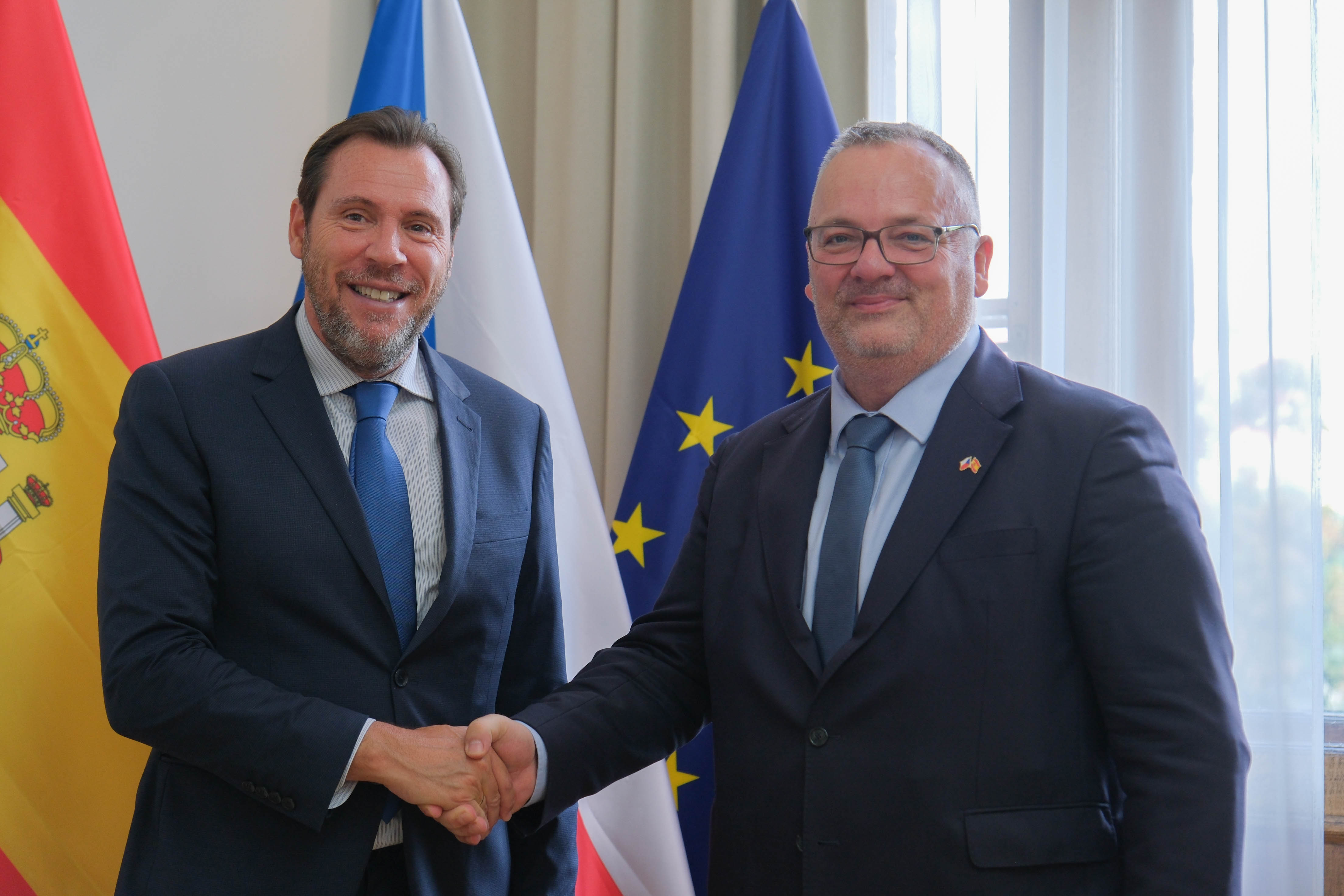
Both ministers agreed that the European Union must maintain strong support for transportation infrastructure through the Connecting Europe Facility (CEF III). Both the Czech Republic and Spain are among the countries advocating for sufficient funding for strategic railway projects in the next budget period.
“The development of transportation infrastructure is one of the key prerequisites for Europe’s continued economic growth, competitiveness, and security. That is why we consider it essential that the Connecting Europe Facility have sufficient financial resources in the next budget period as well. The Czech Republic and Spain share many common interests in this area, and we intend to cooperate closely during negotiations on the future shape of CEF III,” said Transport Minister Ivan Bednárik.
The ministers devoted a significant portion of the meeting to the development of high-speed rail lines. The Czech Republic is continuing to prepare a backbone network of high-speed connections that will link the country’s major economic centers with European transport corridors. Spain, which has one of the most extensive high-speed rail networks in Europe, can be a valuable partner for the Czech Republic in sharing experience and know-how. The ministers therefore agreed to establish a special working group to support rail transport.
“Spain has long been among the European leaders in the construction of high-speed rail lines and has succeeded in implementing these projects at very competitive costs per kilometer. One of the reasons is the high degree of standardization of technical solutions and the use of standardized designs. It is precisely in this area that I see room for inspiration for the Czech Republic as well,” adds Minister of Transport Ivan Bednárik.
The ministers also discussed the situation in rail freight transport, where Spain supported Minister Bednárik’s initiative at the last meeting of the Council of Transport Ministers, which aims to halt the long-term decline in rail’s share of freight transport in Europe. Another important topic was the competitiveness of the European rail industry. The Czech Republic supports Spain’s efforts to push for the acceleration and simplification of approval, certification, and licensing processes at the EU level, which currently often delay the delivery of new rail vehicles and complicate the introduction of innovations. According to the Spanish side, delays in the delivery of new trains in Europe typically range from two and a half to three years. “The European railway industry needs faster and more predictable approval processes. If we want to succeed in global competition, we must remove unnecessary administrative barriers and accelerate the introduction of innovations. We see clear agreement with Spain on this point,” said Bednárik.
In conclusion, both ministers praised the long-standing constructive cooperation between the Czech Republic and Spain and reaffirmed their interest in continuing the dialogue on issues that will shape European transportation and mobility in the coming years.